Hobby Hotel Explained: Concept, Benefits & Real-World Examples
The term “hobby hotel” typically refers to accommodations tailored around a specific hobby or enthusiast niche, whether aviation, gaming, collectibles, or artistic pursuits. Unlike conventional hotels, these properties push experiential boundaries by embedding passion-driven design, immersive environments, and tooling suited to their target audience.
Rooted in experiential hospitality, the model takes inspiration from pop-up themed hotels (e.g., a Nutella pop-up hotel) and aviation-focused rooms like Haneda Airport’s Superior Cockpit Room.m These spaces offer more than just lodging; they deliver engagement through themed settings, interactive features, or specialized amenities.
Design Philosophy Behind Hobby Hotels
Purpose-Built Immersion

A hobby hotel prioritizes immersion. Decor, room layout, and shared spaces are branded around a niche and thoughtfully curated to trigger er deep connection. For instance, an aviation-themed hotel might replicate cockpit panels, flight simulation seats, or airline memorabilia. Guests aren’t just staying, they’re momentarily living their passion.
These spaces often blur leisure with specialty. A music hobby hotel might feature recording booths, vinyl libraries, and instrument corners where visitors may play or practice freely.
Community-Centric and Flexible Design
These hotels often cultivate community hosting themed events, meetups, or skill-sharing sessions. Shared hobby spaces like maker corners, game lounges, or observation decks strengthen social exchange among like-minded guests.
Technologically, hobby hotels are function-forward. For example, the TWA Hotel at JFK blends 1960s jet-age aesthetics with modern comforts like blackout curtains and soundproofing, adapting style into performance.
Technology That Supports Hobby Hotel Experiences
Though driven by nostalgia or niche aesthetics, hobby hotels seamlessly layer in modern comforts:
-
Embedded Wi‑Fi, digital key access, and smart climate control ensure baseline hospitality doesn’t hinder immersion.
-
Specialized tech like flight simulators, gaming rigs, or sound systems enhances engagement while being unobtrusive.
-
Many airport-adjacent hotels now support pre-travel routines with 24-hour service, meeting rooms, and convenience bundles.
By combining analog charm with 21st-century functionality, hobby hotels deliver both authenticity and practicality.
Real-World Examples of Hobby Hotels
HK’s Cockpit-Themed Airport Hotel Room
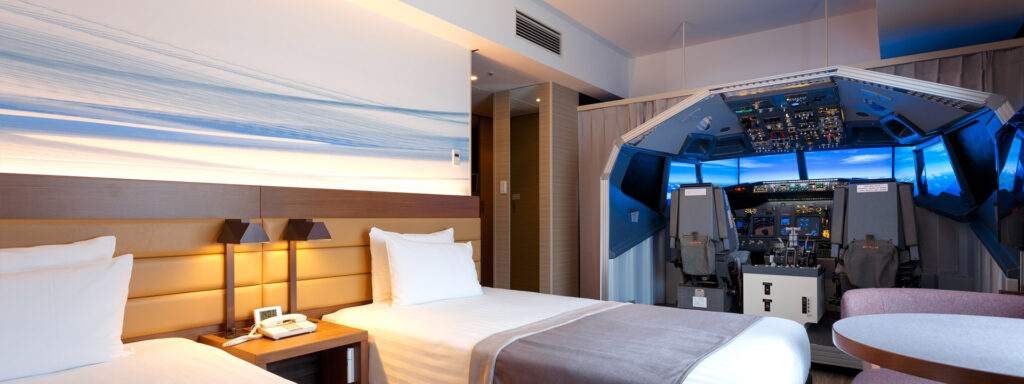
Superior Cockpit Room at Haneda Excel Hotel Tokyu
This Tokyo Airport hotel installed a Boeing 737‑800 flight simulator inside a guestroom, available for booking, complete with a 90-minute flying lesson led by an expert instructor. The experience marries aviation fandom with hotel convenience and transforms what would be ordinary lodging into an immersive flight lesson, a dream stay for aviation hobbyists.
TWA Hotel Vintage Jet-Age Room
Located in the iconic Eero Saarinen terminal, the TWA Hotel recreates the 1960s glam jet age with brass lighting, rotary phones, and a restored split-flap departure board while offering modern amenities like soundproofing and blackout curtains. This blend of mid-century aviation nostalgia and hospitality tech captures a specific enthusiast aesthetic, making it both a hotel and a time capsule.
Bloc Hotel Modular Capsule Room
Inspired by Japanese capsule hotels, Bloc Hotel creates compact, prefabricated rooms installed off-site and stacked on arri,val a modular concept tailored to efficiency and minimalist lifestyle. LeLee Not hobby-specific, this concept models how niche preferences, such as space-saving enthusiasts or minimalists, can inform hotel architecture and guest experience.
Hilton Airport Hotels – Convenience and Engagement
Airport hotels such as those by Hilton have evolved from mere layover stops to destinations themselves. Amenities now include spas, upscale dining, and family-friendly dining,gn creating mini getaways adjacent to terminals. While not built for a hobby, they echo the thinking of hobby hotels by prioritizing experience-driven services beyond accommodation.
Benefits of the Hobby Hotel Model

Deepened Guest Engagement
By catering to guests’ passions, whether piloting simulators or indulging retro restoration hobbies, hotels foster emotional resonance. Visitors don’t just rest, they interact, learn, and become part of a themed experience that transcends transient travel.
Differentiation in a Crowded Market
Hobby-hotels stand out from standard lodging by offering a curated identity, resulting in stronger market appeal and a unique social media presence. Their novelty can drive buzz, bookings, and return visits from enthusiasts.
Authentic Personalization
Offering tailored spaces like podium-style gaming rooms, creative studios, or themed lounges allows hobby hotels to feel bespoke. Guests feel seen, not one of many, but one of the few who share the same niche interest.
Monetization Through Experiences
Hobby hotels can generate revenue through themed add-ons, flight simulator sessions, recording studio hours, or private creative workshops. These alternative services complement lodging and deepen value for both guest and operator.
Use Cases: Who Benefits from Hobby Hotels?

Niche Enthusiasts Seeking Immersion
Travelers passionate about specific hobbies like flight simulation, retro gaming, or vintage aesthetics find hobby hotels deeply rewarding. The design immerses them in surroundings aligned with their interests, enhancing satisfaction.
Corporate or Event Group Tie-Ins
Hobby hotels can host themed workshops or corporate retreats with a twist, such as a pilot-themed leadership event at a flight-simulator hotel, creating engagement while aligning with branding or team-building objectives.
Creative Professionals Seeking Stimulation
Artists, writers, or content creators gain inspiration from immersive environments. For instance, the retro ambiance of the TWA hotel may unblock creative flow, providing far more than just accommodation.
Travelers Craving Unexpected Experience
For travel-savvy guests, staying in a themed or hobby-driven setting is a novelty that adds storytelling value to the journ.y, Memory becomes part of the journey.
Frequently Asked Questions (FAQ)
Q1: What exactly is a hobby hotel?
A hobby hotel is a lodging tailored around a specific passion aviation, gaming, art, or a cultural theme. It integrates that theme into every guest touchpoint, from decor and amenities to activities and ambiance.
Q2: Are hobby hotels practical for regular travelers?
Yes. Many hobby hotels balance immersive experiences with standard hotel comforts like Wi‑Fi and climate control. Even if only staying for a night, guests gain both novelty and functionality.
Q3: Can a conventional hotel adopt hobby elements?
Absolutely. Many mainstream brands experiment with pop-up themed rooms or collaborate with hobby-focused partners. The emerging hospitality trend recognizes that even partial integration of hobby elements can elevate guest experience.