Hotel Booking: Ultimate Guide to How Online Booking Works, Platforms & Trends
In today’s digital age, hotel booking has evolved into a dynamic ecosystem powered by advanced technology, global distribution platforms, and consumer-first innovation. This in-depth guide explores how online hotel booking works, key players, technological benefits, real-world examples, and why understanding this system matters for both travelers and industry professionals.
How Online Hotel Booking Works and Key Mechanics
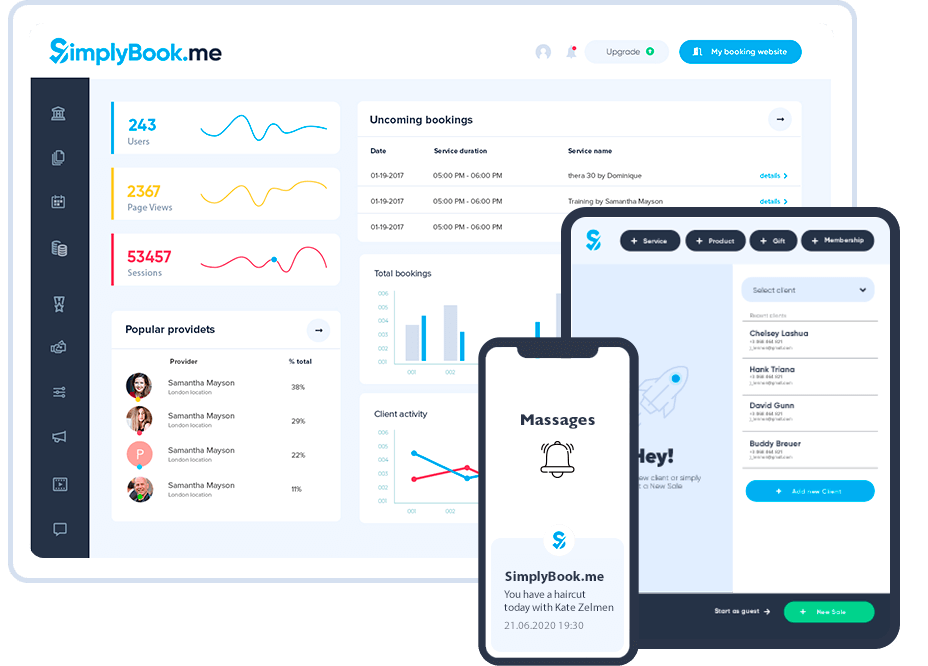
Online hotel booking systems connect hotels and guests via sophisticated backend software and global networks. At their core, these systems rely on Property Management Systems (PMS) that track room inventory, pricing, and guest data. The PMS feeds availability into online travel agencies (OTAs), direct booking engines, and meta‑search platforms, enabling real-time visibility and reservations across multiple channels. The technical architecture ensures synchronization: once a room is booked on one channel, availability updates instantly across the others.s
Unlike traditional merchant models, many platforms (such as Booking.com) operate on an intermediary model, whereby hotels set their pricing and terms via their extranet, and the platform collects a commission post-stay without owning inventory.
Strong Technology and Automation Benefits
Real-Time Inventory and Channel Management
Booking systems automate synchronization across channels—OTAs, direct booking engines, and your website, all fed by the PMS. This prevents overbooking and ensures accurate room counts. Automated rate updates align pricing strategies across channels quickly, especially during high-demand periods.
Enhanced Direct Bookings and Marketing Tools
Modern booking engines let hotels accept reservations directly on their website. Features like mobile‐friendly design, promo code integration, multi-currency support, and analytics empower properties to increase direct bookings, cut OTA commissions, and create personalized offers for returning guests. These tools also support upselling secondary services like spa packages or local tours.
Data Insights and AI‑Driven Revenue Optimization
Systems now integrate AI‑based pricing models that forecast occupancy, adjust rates dynamically, and predict demand elasticity. These technologies optimize yield, especially for boutique or luxury properties.
Major Platforms in the Booking Ecosystem
Booking.com – The Global Leader
Booking.com, part of Booking Holdings, remains one of the largest platforms with over 28 million listings globally spanning hotels, apartments, and homes in more than 220 countries. It allows users to filter by amenities, language, and price. Its business model supports free customer use—hotels manage pricing via their extranet and pay commission after guests complete their stay.
Meta‑Search Engines & Aggregators
Platforms such as Kayak, Trivago, Hotels.com, Expedia, and Orbitz aggregate hotel listings across multiple sources. They provide price comparisons and redirect the booking to OTA or direct booking platforms. These services empower travelers to compare choices and often leverage price dispersion trends to highlight savings opportunities.
Direct Booking Tools & Property Systems
Boutique hotels and independent properties often use direct booking engines integrated into their websites, channel managers, and property management systems. These tools allow full control over availability and pricing while eliminating commission costs on direct sales. They also support integrations with CRM, payment gateways, and housekeeping scheduling to streamline operations.
Real‑World Booking Platforms & Use Case Examples
Example 1: Booking.com for Last-Minute Business Travel
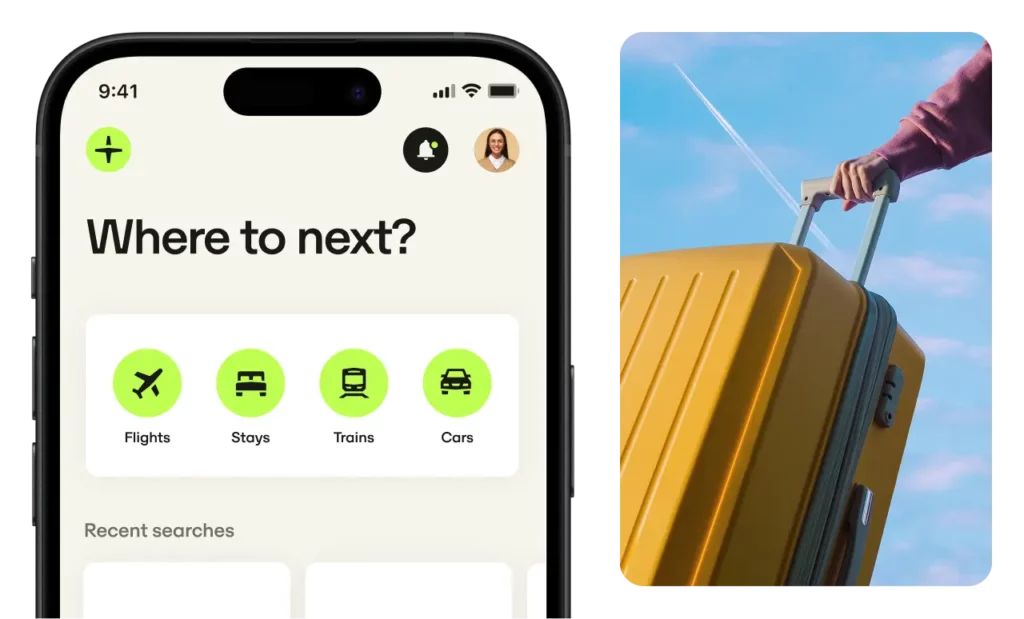
A corporate traveler needing accommodation hours before arrival can use Booking.com’s app or website to filter hotels near their meeting location, view real-time availability, and secure instant booking. Verified reviews, flexible cancellation, and a multilingual interface make it ideal for expedited trips.
Example 2: Boutique Hotel Using Direct Booking Engine
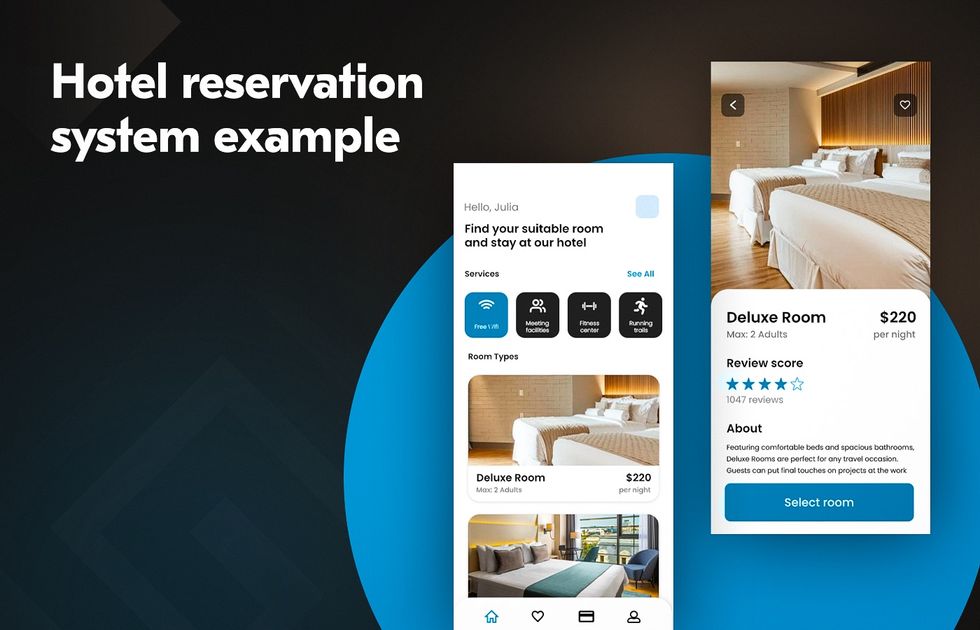
A small boutique hotel integrates a direct booking engine on its website, complete with multi-language support, promotional codes for return guests, and add‑on packages. Guests book directly, receive confirmation emails instantly, and the hotel avoids OTA commissions—enhancing profitability.
Example 3: Multi‑Property Group with Channel Manager
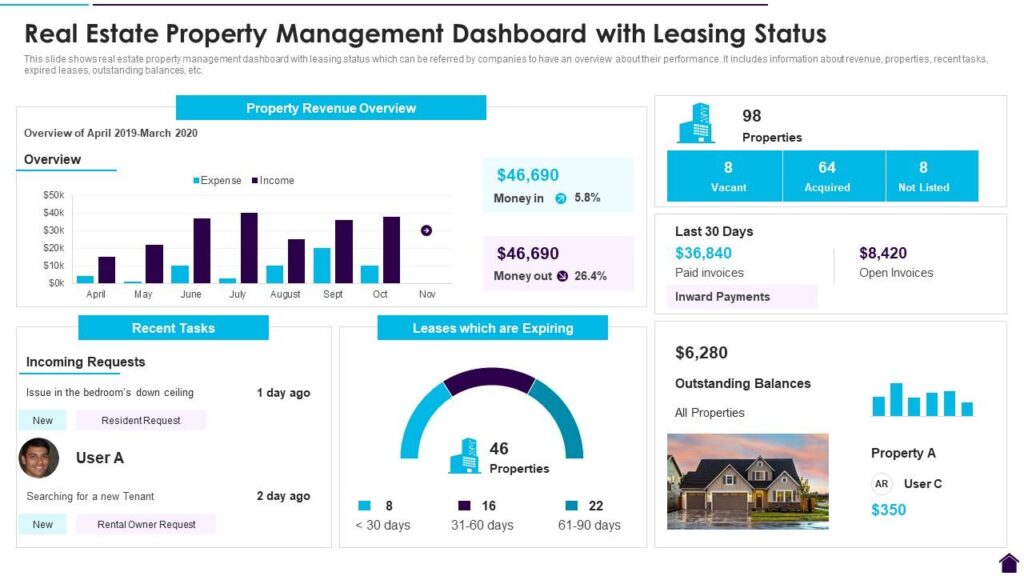
A collection of three small hotels uses a channel manager connected to their PMS to sync rates and inventory across OTAs and direct bookings. When one room sells on one channel, the rest update accordingly, avoiding double bookings. Analytics dashboards help staff adjust pricing based on seasonality and competition.
Example 4: Meta‑Search Price Comparison Use
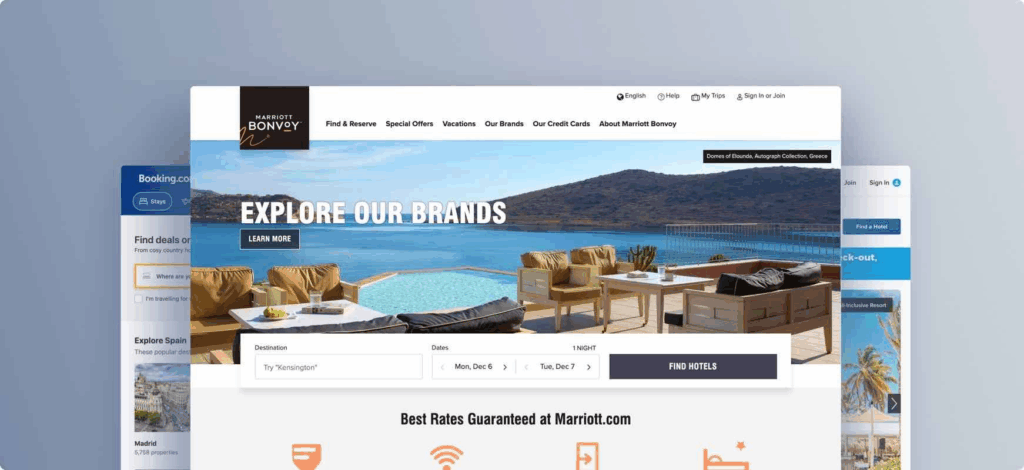
A traveler searches for a weekend hotel in London using a meta‑search engine like Trivago. The engine displays rates across multiple booking platforms, highlights the cheapest options, and redirects to the booking site of choice. This guides decision-making while comparing reviews and cancellation policies.
Example 5: AI-Driven Revenue Management for Occupancy Prediction
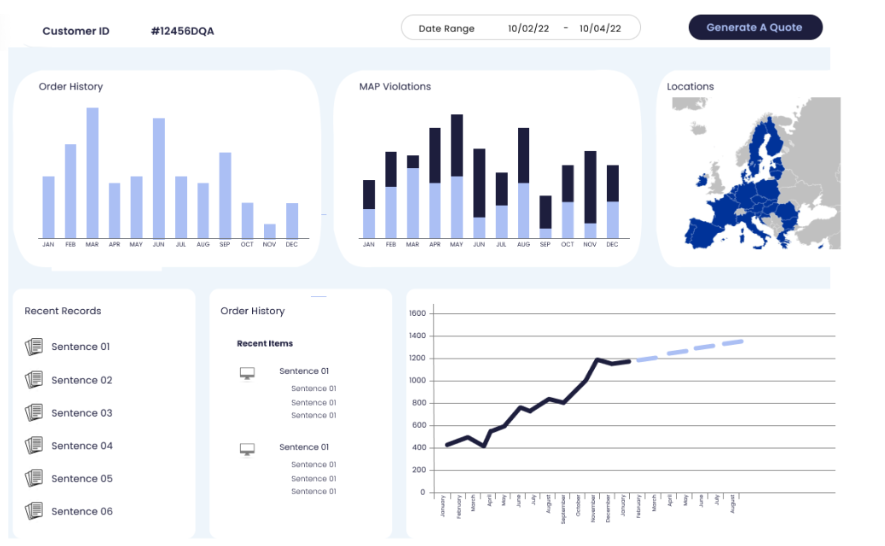
A luxury resort uses AI models that analyze past occupancy, competitor pricing, seasonality, and events to dynamically adjust nightly rates for different room types. This approach helps maintain high occupancy while maximizing RevPAR across low and high-demand periods.
Packed Benefits of Modern Hotel Booking Systems
Booking systems deliver massive productivity gains and strategic advantages:
-
Efficiency at scale: Front desk, reservation staff, and revenue teams can automate workflows, reducing human error and saving time.
-
Global visibility with local control: Hotels reach international customers via OTAs while retaining pricing flexibility through back-end dashboards.
-
Data-informed strategies: Analytics on booking trends, guest origins, and promotional performance inform better pricing and marketing decisions.
-
Mobile and multi-channel alignment: Booking engines and OTA presence ensure consistent availability on mobile and web platforms for modern travelers.
-
Guest personalization and loyalty: Host direct-booking promotions, loyalty rewards, and upsells to enhance repeat business and perceived value.
Use Cases – Solving Real Problems with Booking Technology
Problem: Overbooking Risks Across Multiple Channels
Solution: Centralized PMS-channel manager sync prevents simultaneous sold rooms. Inventory updates automatically across OTAs and direct booking, reducing human error and guest dissatisfaction.
Problem: High OTA Commission Costs
Solution: Direct booking engines with promotional codes, loyalty offers, and branded upsells encourage guests to book via the hotel website, preserving margins and guest relationships.
Problem: Complex Revenue Optimization
Solution: AI-based dynamic pricing models forecast demand, adjust rates automatically, and optimize revenue outcomes depending on season, events, and occupancy cycles.
Problem: Multi-language, Multi-market Communication
Solution: Platforms that support multiple languages, currencies, and local payment gateways enable properties to appeal to global travelers, reducing friction and booking abandonment.
Frequently Asked Questions (FAQ)
1. What’s the difference between an OTA and a direct booking engine?
An OTA like Booking.com aggregates accommodations from many providers and charges a commission per booking. A direct booking engine is embedded on the hotel’s website, allowing guests to reserve directly—saving commission cost and strengthening guest-brand connection.
2. Why do prices differ across platforms?
Variables include dynamic pricing, rate parity differences, promotional discounts, and timing. Price dispersion persists because platforms have different contracts and show relative urgency as stay dates approach.
3. How does mobile booking growth affect hotels?
With rising mobile bookings, intuitive, responsive booking engines are crucial. Hotels without mobile-optimized booking risk high abandonment and lost revenue.e
Conclusion
Hotel booking in 2025 is a sophisticated, multi-channel system that blends backend technology, strategic rate management, and global distribution with consumer convenience. From travelers securing last-minute stays via OTAs to boutique hotels optimizing direct sales and AI-driven pricing, everyone participates in a fast-moving ecosystem. Understanding how booking platforms operate, their benefits, and use cases helps both industry professionals and savvy travelers make better decisions and enjoy more efficient, personalized experiences.