Inn Studio Explained: A Comprehensive Guide to the Concept, Design, and Benefits
“Inn Studio” represents a hybrid lodging model that blends the intimate, cozy ambiance of an inn with the creative, flexible space of a studio. It’s a newcomer in hospitality that appeals to modern travelers, creatives, and digital nomads seeking both comfort and workspace in one place. Unlike standard hotel rooms, Inn Studios often offer a small kitchen or kitchenette, designated work nooks, and design-forward aesthetics, making them ideal for extended stays or focused work retreats.
This concept bridges the gap between traditional inns (known for charm and hospitality) and studio apartments (known for functionality and autonomy). It’s about providing the recipe for productivity, inspiration, and comfort all under one roof.
Origins and Practical Appeal
The Inn Studio concept evolved from rising demand among millennial and Gen Z travelers for hybrid accommodation: somewhere they could both live and work seamlessly. Business travelers and creatives saw that conventional hotel rooms lacked the kitchen or workspace they needed, while Airbnb often lacked hospitality reliability. Inn Studios emerged to fill that gap, combining thoughtful design, hospitality service, and workspace efficiency.
This model has particular appeal in smaller towns or creative hubs, where guests may stay days or weeks, needing both comfort and a productive environment. The design is generally minimalist but warm, with enough amenities to feel like a self‑contained studio, yet with service-oriented touches, daily cleaning, friendly reception, and sometimes breakfast service.
Design Elements and Atmosphere in Inn Studios
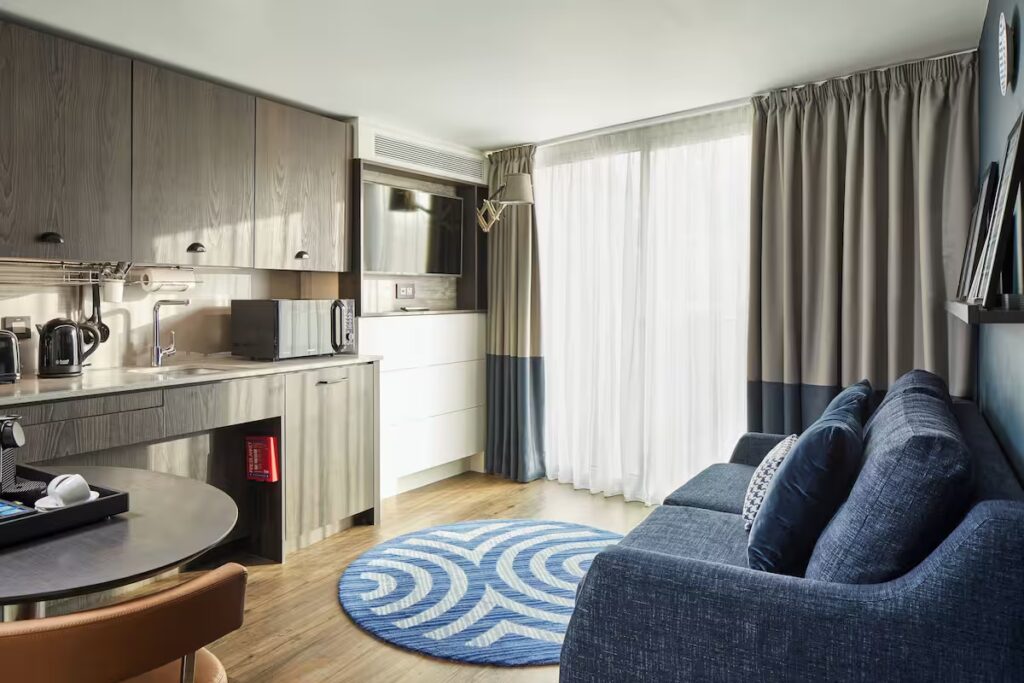
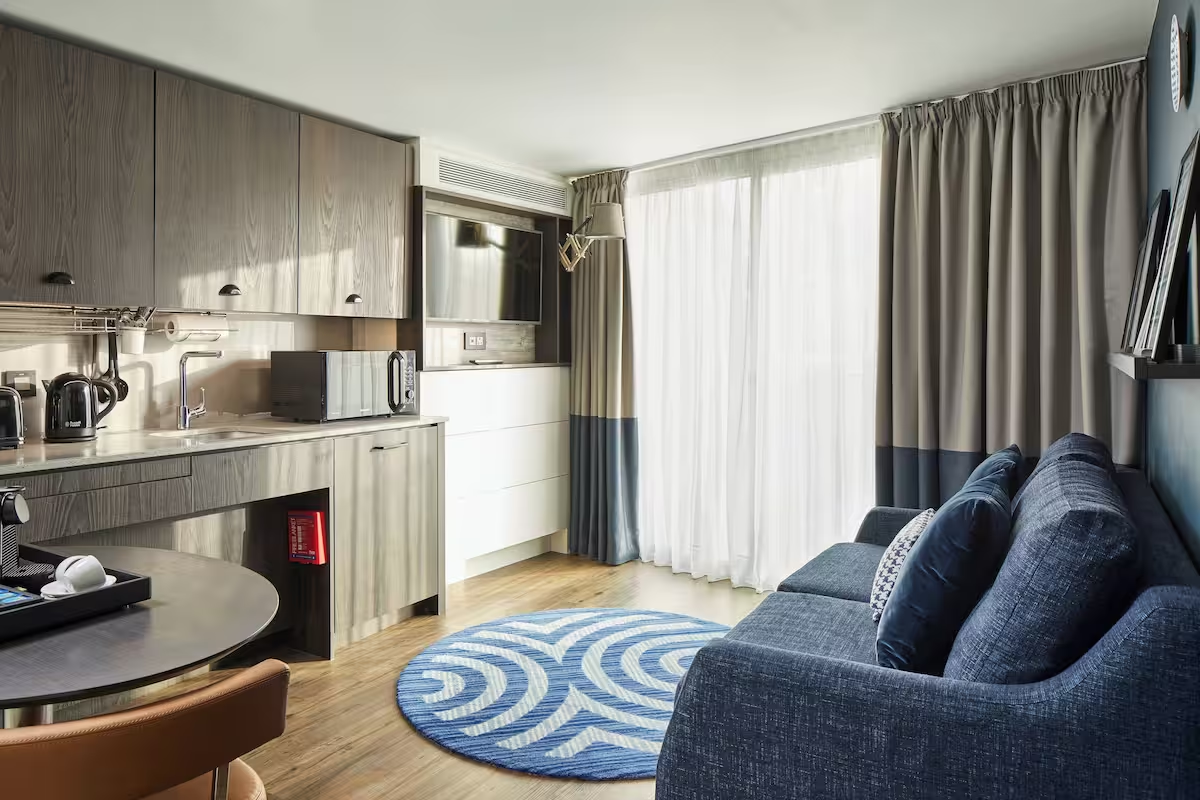
Inn Studio room interior with workspace and kitchenette
Inn Studios typically blend natural materials, lightwood cabinetry, concrete surfaces, and soft textiles to create a balanced and intentional environment. A standard layout might include a comfortable bed, compact seating area, a desk or writing nook, and a petite kitchen area with a stovetop, small fridge, and sink. Lighting design is layered: warm bedside lamps, task lighting at the desk, and ambient overhead fixtures that support both relaxation and work.
Common areas often reflect the same ethos lounges doubling as informal meeting spaces, shared kitchens with community tables, and quiet outdoor terraces. The result is a flexible, human-scale environment where guests can transition smoothly from work to rest.
Communal lounge in an Inn Studio property
Design emphasizes flexible zones. A bench adjacent to the kitchenette might double as a dining spot, morning workstation, or reading nook. The communal lounge is curated for both socializing and solo focus: plush seating, low shelves with books or board games, and soft acoustic panels to mediate noise. This scaling from private studio to shared, low‑key common areas maintains an intimate atmosphere even in shared spaces.
Technology Integration in Inn Studios

Seamless Digital Connectivity for Work and Life
At the core of the Inn Studio’s appeal is reliable, fast Wi‑Fi, often with Ethernet ports in the studio for high-speed work. Smart lighting adjustable between ‘work mode’ and ‘relax mode’ helps shift mindset seamlessly. USB and universal outlets near the desk and bedside support device charging without clutter.
Keyless entry and app-based check-in enable flexible arrivals. Digital housekeeping scheduling ensures that guests can choose optimal times for maintenance without interruption. These technologies prioritize convenience and flexibility while respecting the studio’s calm aesthetic.
Tech-Enabled Comfort Without Distraction
Climate control is often smart or silent underfloor heating or ultra-quiet split systems, allowing temperature changes without noise. Small smart appliances like induction cooktops or mini fridges with a silent compressor support autonomy without disrupting quiet. Sound-absorbing design helps maintain calm, whether in private or shared spaces.
App-based guest guides provide info on property amenities and local recommendations, complementing the human touch without replacing it. Everything tech-wise supports independent comfort, without overwhelming form or tranquility.
Real-World Examples of Inn Studio Properties
.png)
Creative Co-Living Inn Studio.
Creative Co‑Living Inn Studio – located in a revitalized urban arts district, this property contains 10 private studios with a kitchenette, desk, and culturally themed decor. Guests include visiting artists, freelance writers, and remote workers. The shared lounge doubles as a gallery evening space, with local art rotating regularly. Residents often spend mornings working at desks, afternoons exploring galleries, and evenings regrouping in the communal area, perfectly combining work, inspiration, and hospitality.
Countryside Inn Studio Retreat
Countryside Inn Studio Retreat – nestled near scenic landscapes, this property offers studio units that open onto private terraces. Each includes a small kitchenette, writing desk, and soft linens. The emphasis is on quiet solitude; Wi‑Fi reaches outdoor seating, too. Guests rise early to write at desks bathed in morning light, then step outside for fresh air. Technology supports seamlessly, but the experience remains about quiet creative immersion.
Urban Extended-Stay InnStudioi.o
Urban Extended‑Stay Inn Studio – situated near a business hub, this offering targets professionals on long projects. Studios are compact but well‑appointed with workspaces, efficient kitchenettes, and fast Wi‑Fi. A lounge includes business books and community whiteboards for quiet brainstorming. The model provides the comfort of self‑service and the assurance of hospitality, a middle ground between corporate suites and short-term rentals.
Boutique Design-Focused Inn Studio.
Boutique Design-Focused Inn Studio – in a design-forward city neighborhood, this property features handcrafted furniture, custom lighting, and locally produced bedding. Each studio is a creative canvas, appealing to architects, photographers, and designers. Communal areas include material libraries or small workshop zones, allowing guests to test ideas during their stay. It’s a living studio plus a hotel, truly blending creative immersion and comfort.
Benefits of Staying in an Inn Studio
Enhanced Productivity in a Home‑Like Setting
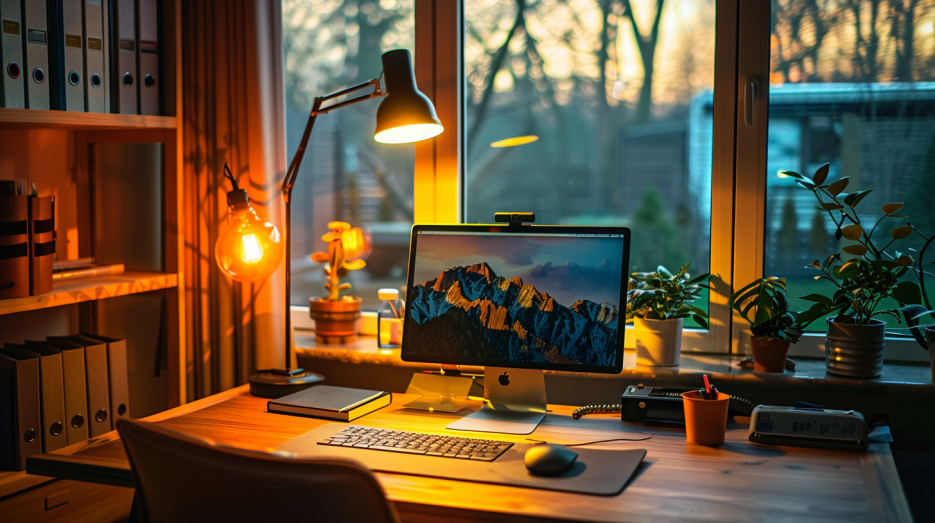
Inn Studios provide a dedicated workspace coupled with lodging. Creatives, remote professionals, and students benefit greatly from these spaces reduce disruption, support focused work, and offer restful amenities. The presence of a kitchenette means basic meals can be prepared, improving well-being and reducing reliance on impersonal service or takeout.
Flexibility and Emotional Comfort
Guests retain autonomy in choosing when to cook, when to work, and when to retreat. This flexibility supports varied rhythms: morning sprints, afternoon breaks on terraces, evening downtime. The psychological comfort of “owning” a small but functional space within a service environment helps concentration, well-being, and creative flow.
Community Without Crowds
Communal lounges, shared kitchens, and quiet social zones foster connection but in gentle doses. Guests can choose when to mingle and when to retreat. For creative travelers or early professionals, this balance supports occasional collaboration or networking without overstimulation.
Practical Use Cases for Inn Studios

Digital Nomads and Remote Professionals
For remote workers transitioning between cities, Inn Studios offers workspace-ready rooms with reliability and support. They bring structure to the desk, a comfortable bed, and a kitchen without the isolation of an apartment or the lack of hospitality of a plain rental. Tech infrastructure and flexible check-in smooth the working stay.
Creatives on Residency or Short Projects
Writers, artists, or filmmakers in town for short-term projects benefit from Inn Studios, which have quiet, curated studios to focus on, plus hospitality services like housekeeping and reception. Communal areas can seed collaboration or quiet reflection; the design supports both focus and inspiration.
Graduate Students or Visiting Scholars
Academics on sabbatical or exchange may prefer Inn Studios for their weeks- or months-long stays in private apartments that include kitchenettes, desks, and social spaces, all supported by hotel-level services. The model balances independence with community and consistency of service.
Frequently Asked Questions (FAQ)
Q1: How does an Inn Studio differ from a standard hotel room?
An Inn Studio combines lodging with functional living space—typically including a kitchenette, designated workspace, and flexible layout. It’s designed for productivity and extended stays, whereas hotel rooms tend to focus purely on rest and aesthetics.
Q2: Who benefits most from Inn Studio stays?
Remote professionals, creatives, graduate students, and anyone on short- to mid-term stays who need both comfort and workspace enjoy Inn Studios most. The model suits those who value autonomy, design, and quiet functionality.
Q3: Is technology in Inn Studios excessive?
No. Technology in Inn Studios is practical, not flashy—fast Wi‑Fi, smart lighting, silent climate control, and optional app-based services support work and comfort without sensory clutter